
How to reduce the return rate of an online fashion store.
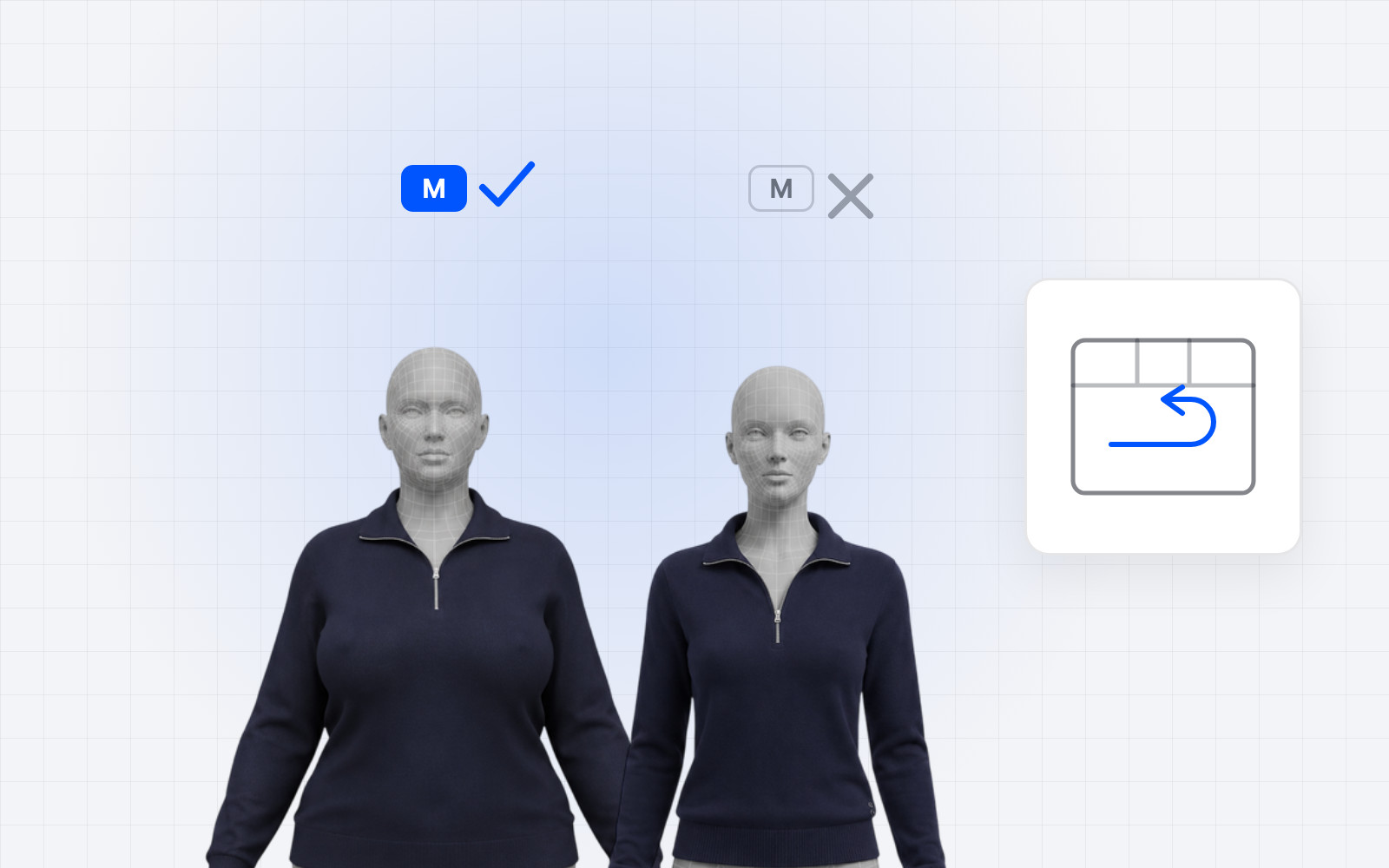
Returns are the hidden cost of online fashion. According to the National Retail Federation and Happy Returns (2025 Retail Returns Landscape), 19.3% of US online sales are returned, against 15.8% for retail as a whole. In France, Fevad put the average return rate at 24% in 2023-2024. And apparel does worse than average: sector studies place it between 20 and 30%, with some segments such as fast fashion or swimwear reaching 50%.
For an independent brand, each return costs between €8 and €20 to process according to the Benchmarks du e-commerce 2026 (logistics, reconditioning, labour) on orders whose margin is often lower than that amount. Reducing returns is not a customer-service project: it is a direct profitability lever.
Understand where returns come from before reducing them
All studies converge on the hierarchy of causes. Size and fit dominate: according to data compiled by Coresight, fit uncertainty accounts for roughly half of apparel returns (45 to 53% depending on the study). Next come the gap between the photo and the product received, then defects.
One practice amplifies everything: bracketing, which consists of ordering several sizes of the same item to keep only one, and which, according to Narvar, 63% of consumers say they practise. What these causes have in common: they are born before the purchase, at the moment the visitor chooses without knowing. That is where they must be treated.
The levers that act on the cause
1. Accurate, complete product data
Real flat measurements per size, composition, fabric weight, cut indication (fitted, straight, oversized) and sizing advice per product, not per brand. A garment that runs small and says so generates fewer returns than a garment that runs small and stays silent.
2. Visuals showing the garment worn on several body types
Photos on several models of different sizes, with the size worn indicated, and videos of the drape in motion. The goal is to close the gap between expectation and reception, the second cause of returns.
3. Customer reviews enriched with body data
A review saying “I'm 1m72 for 64 kg, I took S, perfect” is worth more than a rating. Review forms that ask for height, weight and size purchased turn every customer into fit data for the next ones.
4. Personalised size recommendation
Static size charts don't solve the problem: they ask customers to measure themselves and interpret a table. Personalised size recommendation tools cross the visitor's body data with each garment's real measurements to state directly which size to order. It is the lever that tackles the first cause of returns head-on.
5. Virtual try-on
Seeing the garment worn on yourself before buying treats the first two causes at once: doubt about the look and, when paired with a recommendation, doubt about the size. Virtual try-on is also a structural answer to bracketing: a customer who knows which size fits has no reason left to order three.
6. A return policy that discourages abuse without punishing use
A clear return window, paid returns on multi-size duplicate orders, or a bonus store credit instead of a refund: adjustments that reduce bracketing without hurting the conversion of good-faith buyers.
7. Measure returns per product, not globally
A global return rate always hides a few SKUs that concentrate the problem: misleading cut, wrong chart, flattering photo. Isolating the 10 most-returned products and fixing their pages is often the fastest gain.
How OptiDress addresses the problem
OptiDress tackles the first two causes of returns in a single product: the visitor creates their 3D digital twin from their physical characteristics, without uploading any photo, sees the store's garments worn on them, and receives for each product a size recommendation with a fit description (OptiSize), computed from their body data and the garment's real measurements. The avatar is kept for 30 days on the store.
Integration is performed by the OptiDress team in under 24 hours, from Shopify to custom-built sites, with a subscription based on monthly visitors, no commitment.
Frequently asked questions.
What is the average return rate in online fashion?
Sector studies place apparel between 20 and 30% returns, against 19.3% for US e-commerce as a whole according to the NRF and Happy Returns (2025), with some segments reaching 50%.
What is the first cause of returns in fashion?
Size and fit: according to data compiled by Coresight, fit uncertainty accounts for roughly half of apparel returns, far ahead of the photo-product gap and defects.
What is bracketing?
Ordering several sizes of the same item intending to return those that don't fit, a practice declared by 63% of consumers according to Narvar, which mechanically inflates the return rate.
How much does a return cost a brand?
Between €8 and €20 in processing per return according to the Benchmarks du e-commerce 2026 (logistics, reconditioning, labour), excluding product value loss and customer acquisition cost.