
How to increase the conversion rate of an online fashion store.
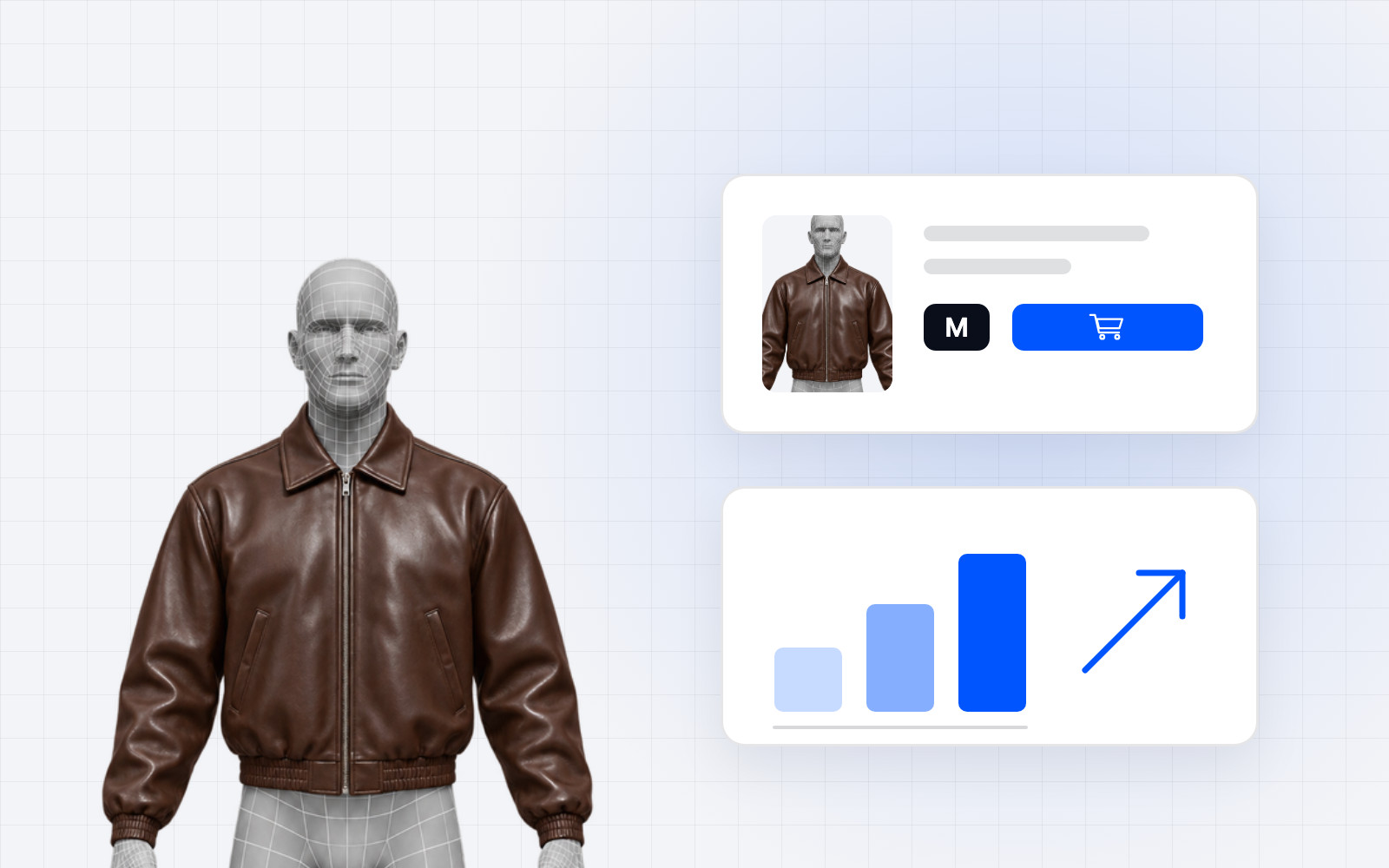
Conversion rate is the most profitable metric to improve: every point gained multiplies revenue without a single euro of extra traffic. And the gap to close is documented: according to Littledata (2026), the median Shopify store converts at 1.4%, while Dynamic Yield (Mastercard) measures 2.9% for large brands and Contentsquare 2.5% on enterprise sites. An independent brand therefore converts roughly half as well as established players, not because its products are worse, but because its shopping experience removes fewer doubts.
The context makes it urgent: Contentsquare's 2026 Digital Experience Benchmark measures a 5.1% year-on-year drop in conversion rates and a roughly 9% rise in cost per visit. Traffic costs more and converts less: monetising existing visitors is no longer optional.
Why fashion converts less than other sectors
Buying clothes online stacks two uncertainties other categories don't have: the look (how will this garment fall on me) and the size (which one to order).
That doubt shows in behaviour: repeat visits before purchase, abandoned carts (Baymard Institute measures around 70% cart abandonment on average in e-commerce) and multi-size orders that artificially inflate conversion before turning into returns. Improving a fashion store's conversion means first reducing those two doubts, then removing the generic frictions of the journey.
The levers, from the most fashion-specific to the most generic
1. Address doubt about look and size
This is the lever specific to fashion. Per-product size guides, real measurements, “runs small / runs large” notes, photos on several body types with the size worn, and for brands that want to go all the way, personalised size recommendation and virtual try-on, which turn uncertainty into a decision at the exact moment it arises: on the product page.
2. Product pages that answer every question
Composition, care, cut, fabric transparency, model height, video of the drape in motion. Every unanswered question is a reason to leave and “think about it”, and not come back.
3. Social proof in the right place
Reviews with customer photos and body data, rating visible from the product page, UGC content. A visitor believes a customer who looks like them more than a brand argument.
4. A frictionless checkout
Guest checkout with no account creation, wallets (Apple Pay, PayPal, Shop Pay), minimal fields, shipping costs shown before checkout: surprise fees remain the leading cause of abandonment documented by Baymard.
5. Speed, especially on mobile
Most fashion traffic is mobile, and that is where conversion is lowest. Compressed images, limited scripts, loading under 2.5 seconds: technical performance is a conversion lever in its own right.
6. Reassurance on returns
A clear return policy, visible from the product page. A useful paradox: properly addressing doubt upstream (lever 1) allows a generous return policy without volumes exploding.
7. Recover abandoned carts
Follow-up emails, reminders of saved items. At around 70% average abandonment (Baymard), it is the most accessible revenue reserve, but it doesn't fix the cause of the doubt: it catches its consequences.
How OptiDress acts on conversion
OptiDress addresses lever no. 1 (the doubt specific to fashion) directly on the product page: the visitor creates their 3D digital twin from their physical characteristics, without uploading any photo, sees the garment worn on them and receives a size recommendation with a fit description (OptiSize).
The avatar is kept for 30 days on the store: the returning visitor, a typical behaviour in fashion shopping, finds their profile again and decides faster. Integration is performed by the OptiDress team in under 24 hours, with a subscription based on monthly visitors, no commitment.
Frequently asked questions.
What is a good conversion rate for a fashion store?
According to Littledata (2026), the median Shopify store sits at 1.4%, while Dynamic Yield (Mastercard) measures 2.9% for large brands. An independent brand between 1.5 and 2.5% is within the norm; above 3%, it outperforms its segment.
Why is my conversion rate falling when my site hasn't changed?
The trend is general: Contentsquare's 2026 Digital Experience Benchmark measures a 5.1% year-on-year drop in conversions, with cost per visit up around 9%. At constant site quality, competitive pressure and traffic costs rise, hence the stake of converting existing visitors better.
Which lever improves fashion conversion the most?
The one that treats the sector's specific cause: doubt about look and size. Generic levers (checkout, speed, reviews) apply to all e-commerce; removing product doubt is specific to fashion and also acts on returns.
Is the cart abandonment rate different in fashion?
Baymard Institute measures around 70% abandonment on average across sectors; fashion sits in the upper range, size doubt adding to the classic causes (surprise fees, mandatory account creation, long checkout).