OptiDress vs Kleep: two solutions, two brand profiles.
Kleep and OptiDress both address the central problem of online fashion (doubt about the look and the size) but they do not serve the same brands. Kleep was built as an artificial intelligence suite for large fashion houses and established retailers; OptiDress is a virtual fitting room designed for independent fashion brands. This page compares both approaches factually. Information verified in August 2026 from each vendor's public communications.
A modular suite, or a single product.
Kleep offers a modular AI suite for fashion commerce: size recommendation (its original product), virtual try-on, conversational search, visual search and personalized recommendations, adoptable separately. The visitor profile is built through a 30-second questionnaire or a body scan from two smartphone photos. Its public references belong to enterprise and luxury (Lacoste, Givenchy, Victoria Beckham) and its pricing is not published: it comes on request.
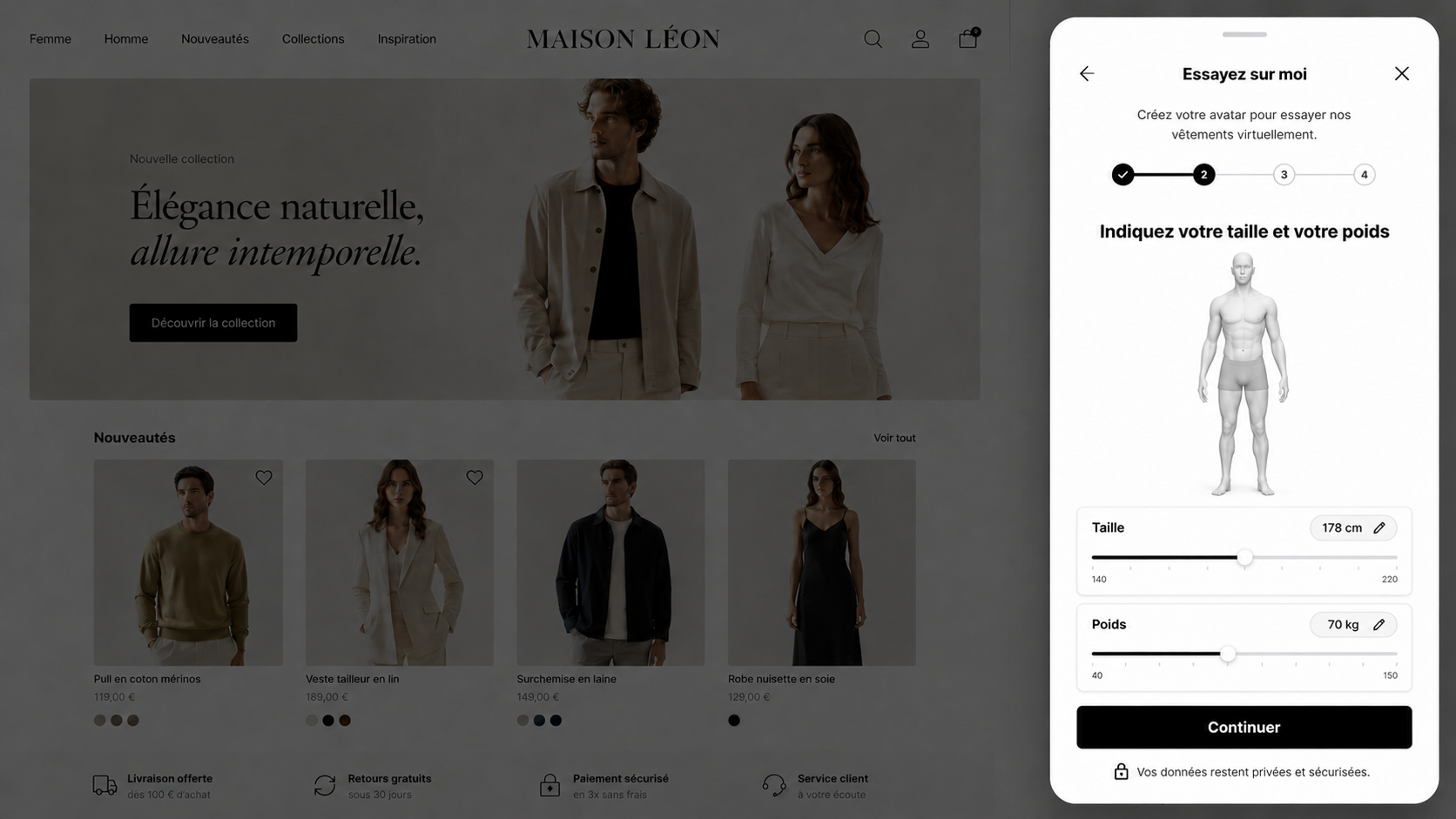
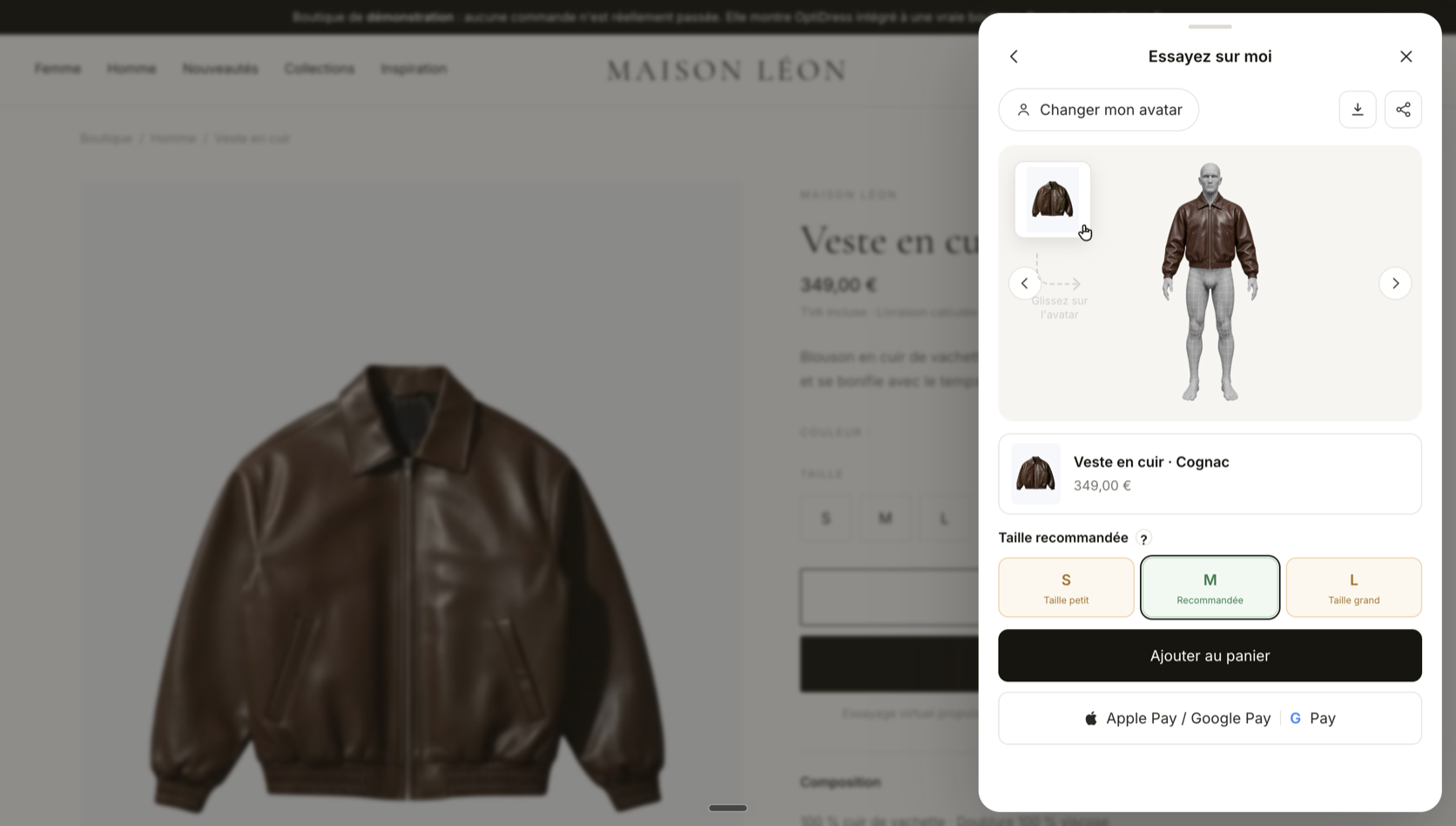
OptiDress makes the opposite choice, specialization: a single product, focused on the purchase decision. Visitors create their 3D digital twin from their physical characteristics, with no photo, ever, see it wearing the store's garments, and get for each product a size recommendation with a fit description (OptiSize). The avatar is kept for 30 days on the store. The whole is designed for independent brands: integration performed by the OptiDress team, a subscription with a plan based on try-on volume, decreasing overage rate, no commitment.
Comparison table.
| OptiDress | Kleep | |
|---|---|---|
| Product nature | Virtual fitting room with native size recommendation: a single product | Modular commerce AI suite: sizing, virtual try-on, search, recommendations |
| Visitor profile creation | Declared physical characteristics, no photo | 30-second questionnaire for the size recommendation; photo required for the visualization* |
| Visualization | The visitor's personal 3D digital twin | Virtual try-on generated from a photo of the visitor* |
| Persistence | Avatar kept for 30 days on the store | No persistence observed: the journey has to be redone at every session* |
| Size recommendation | Yes, native: per product, with a fit description | Yes: per product, from the garment's real measurements |
| Claimed customer profile | Independent and DTC fashion brands | Large houses, retailers and premium brands (Lacoste, Givenchy, Victoria Beckham) |
| Pricing | Four monthly plans, from a free plan with 10 try-ons to a plan with 2,500 try-ons included. Beyond the quota, each additional try-on is billed at a rate that decreases with the plan. No commitment. | On request, no published rate card |
| Integration | Native Shopify app, WordPress plugin, universal script elsewhere | Native apps and modules on the main platforms, including Salesforce Commerce Cloud and Adobe Commerce |
*Observations recorded on Kleep deployments in August 2026; integrations may vary by client. Other information taken from Kleep's public communications.
When Kleep is the right choice.
Kleep is the French sizing reference for established brands: a house or retailer with structured e-commerce teams, operating on enterprise platforms, and looking for a suite of AI tools to roll out progressively (from size recommendation to search and merchandising) will find a solution proven on its segment.
When OptiDress is the right choice.
OptiDress is aimed at independent brands that want the experience level of large houses (seeing the garment worn on yourself, knowing your size) without the purchase cycle or the pricing structure of an enterprise solution. A single product, self-serve installation on Shopify, a subscription with a plan based on try-on volume, decreasing overage rate, and a visitor who never has to upload a photo.
Frequently asked questions.
Do OptiDress and Kleep do the same thing?
Both address doubt about the look and the size in online fashion. Kleep does it through a modular AI suite aimed at established brands; OptiDress through a single product (a fitting room on a personal 3D avatar with native size recommendation) designed for independent brands.
Do I need a photo to use OptiDress?
No, never. The avatar is built from the physical characteristics the visitor provides, and drives both the visualization and the size recommendation. At Kleep, the questionnaire gives access to the size recommendation; visualizing the garment worn requires a photo (observed on deployments, August 2026).
Is OptiDress suitable for a small brand?
That is its core target. Four monthly plans, from a free plan with 10 try-ons to a plan with 2,500 try-ons included. Beyond the quota, each additional try-on is billed at a rate that decreases with the plan. No commitment. The integration is performed by the OptiDress team, and there is no commitment.
Can I try OptiDress before choosing?
Yes: the Maison Léon demo store is freely accessible, and a personalized 20-minute demo is available with no commitment.
See also: OptiDress vs Veesual · OptiDress vs Genlook · Virtual try-on apps for Shopify · Size recommendation: how to choose a solution
Comparison established in August 2026 from publicly available information (each vendor's official sites and communications). Kleep is a trademark of Kleep. Information about Kleep may change; report any inaccuracy to contact@optidress.fr.