OptiDress vs True Fit: data at scale, or the shopper's own avatar.
True Fit claims twenty years of experience in size recommendation: it combines the purchases, returns and kept items of millions of shoppers across many brands. OptiDress starts from a different place: the shopper builds a 3D avatar with no photo, sees the garment worn on it, then gets the recommended size for that garment. This page compares the two factually, from what each vendor publishes, read on November 20, 2026.
What others kept, or what the shopper sees on themselves.
True Fit describes itself as a size and fit intelligence platform. Its recommendation draws on twenty years of purchase and return data across apparel and footwear. It can appear with no action from the shopper (a hint on how the item runs), or become personal once the shopper shares a few details. A conversational agent also answers fit, fabric and style questions on the product page. Its virtual try-on generates an image of the shopper wearing the item from a photo.
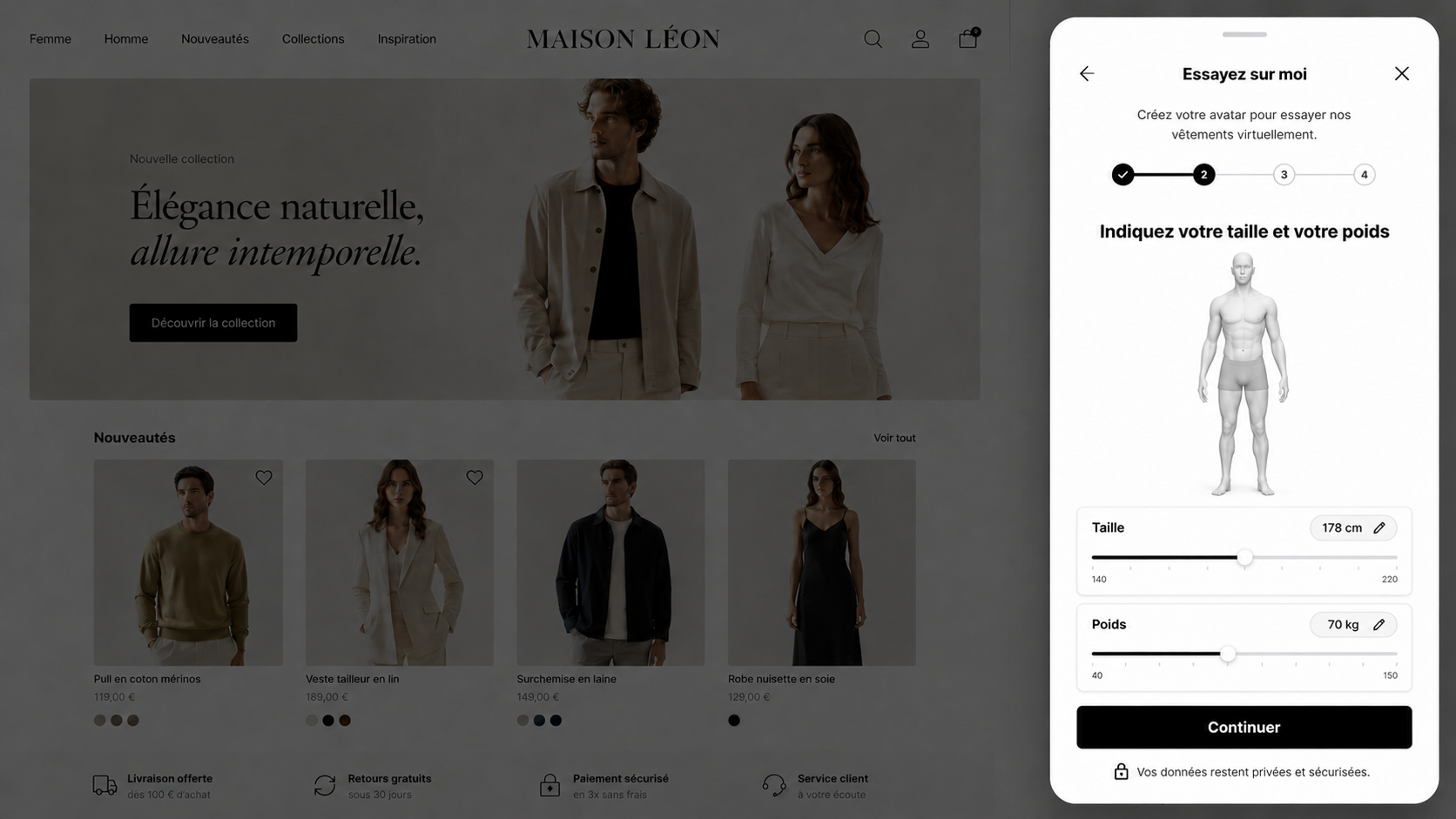
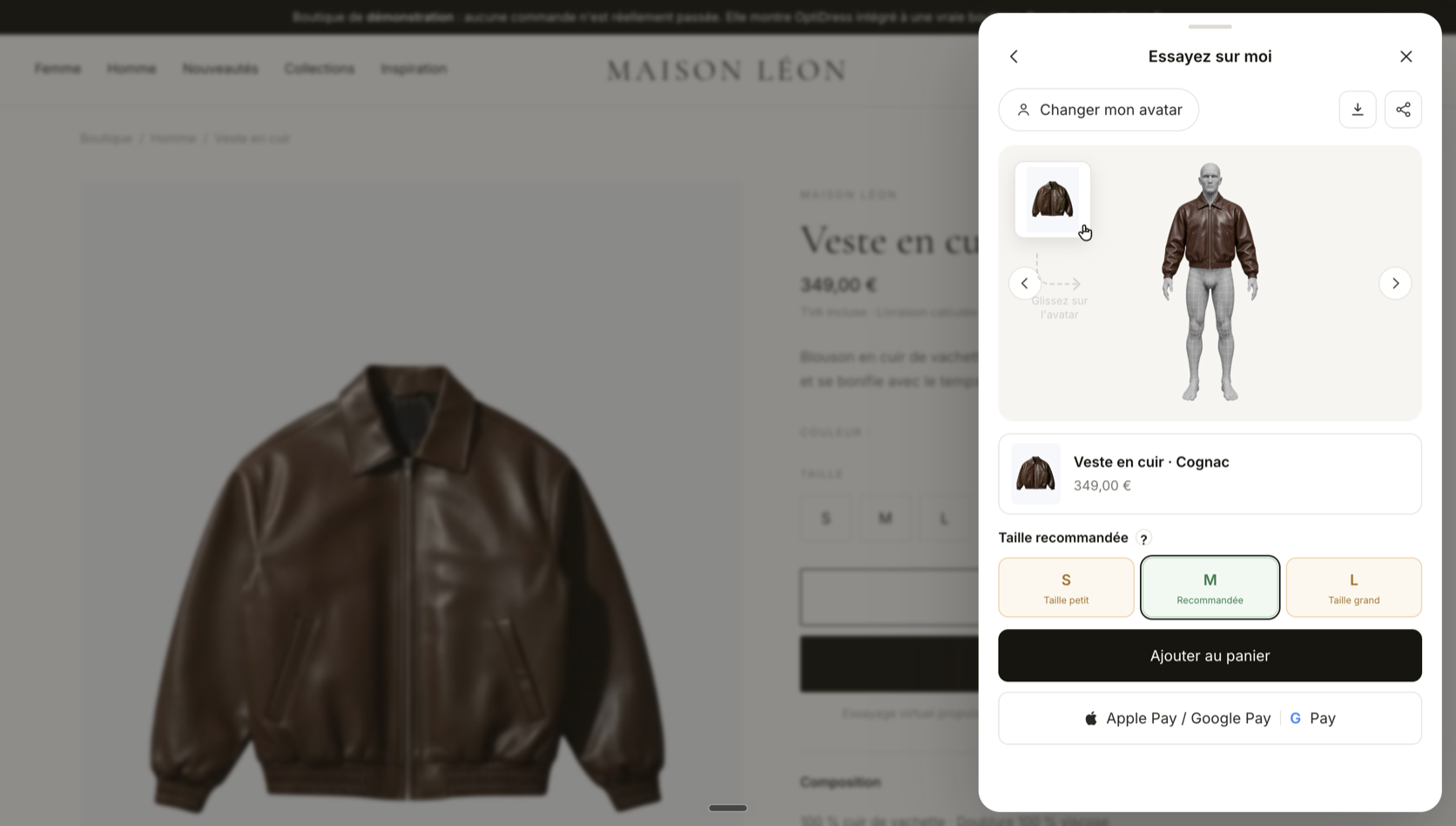
OptiDress chose the avatar: the shopper enters height, weight and body shape, with five optional measurements and in any unit, with no photo and no account. They see the store's garments worn on their 3D avatar, and OptiSize compares that avatar with the brand's size chart and garment measurements to recommend a size, with a word on the fit, inside the OptiDress interface. The avatar is kept for 30 days on the store.
Comparison table.
| OptiDress | True Fit | |
|---|---|---|
| Type of product | Virtual fitting room with built-in size recommendation | Size and fit recommendation platform, with a conversational agent and virtual try-on |
| What the size advice is based on | The shopper's avatar, compared with the brand's size chart and garment measurements | Twenty years of purchase, return and keep data across many brands |
| What the shopper does | Enters height, weight and body shape, with no photo and no account | A hint often shows with no action; for a personal size, they answer a few questions |
| Seeing the garment worn | On the shopper's 3D avatar | Image generated from a photo of the shopper |
| Retention | Avatar kept for 30 days on the store | The agent learns across sessions and retailers; retention period not stated on its site* |
| Categories | Apparel | Apparel and footwear, including kids' (from 2T), intimates and swimwear |
| Languages and units | Interface in 12 languages; any unit (centimetres and kilos, feet, inches and pounds) | Sizing and languages in more than 45 countries per its Shopify page; the Shopify listing shows English* |
| Price on Shopify | Free (10 try-ons a month), then $19.99, $149 and $499 per month | $1,000 per month (Standard plan, up to 150,000 orders a year); enterprise retailers on request |
| Installation | Shopify app, WooCommerce plugin, script on other platforms | Shopify app; data access through MCP and an API for retailers and platforms |
| Shopify listing | 5.0 from 2 reviews, launched May 19, 2026 | 4.5 from 23 reviews, launched July 10, 2023 |
*Read on November 20, 2026 on truefit.com and True Fit's Shopify listing; what a vendor does not publish may still exist for its clients. Results figures claimed by either vendor are not repeated here.
When True Fit is the right choice.
True Fit suits high-volume retailers that sell many brands, footwear and kidswear, and want a recommendation fed by the purchase history of shoppers who came from other stores. Its Shopify plan covers up to 150,000 orders a year, and its data is also open to shopping agents and delivery platforms.
When OptiDress is the right choice.
OptiDress suits independent brands that want shoppers to see the garment worn on themselves before choosing a size, without asking for a photo. The first plan is free, installation on Shopify is self-serve, and the size advice starts from your own garments' measurements, not from a purchase history your store does not have yet.
Frequently asked questions.
Do OptiDress and True Fit do the same thing?
Both help shoppers pick their size. True Fit draws on twenty years of purchase and return data gathered across many brands, and also offers a virtual try-on based on a photo. OptiDress has the shopper build a 3D avatar with no photo, shows the garment worn on it and recommends a size for each garment.
How much do True Fit and OptiDress cost on Shopify?
According to its Shopify listing, read on November 20, 2026, True Fit costs $1,000 per month (Standard plan, up to 150,000 orders a year). OptiDress has a free plan with 10 try-ons a month, then plans at $19.99, $149 and $499 per month.
Do shoppers need a photo to try on a garment?
With OptiDress, no: the avatar is built from height, weight and body shape, and kept for 30 days on the store. True Fit's virtual try-on starts from a photo of the shopper, according to its product page read on November 20, 2026.
Can I try OptiDress before choosing?
Yes: the Maison Léon demo store is freely accessible, and a personalized 20-minute demo is available with no commitment.
See also: OptiDress vs Kiwi Sizing · OptiDress vs Kleep · Size recommendation: how to choose a solution
Comparison established on November 20, 2026 from publicly available information (truefit.com and True Fit's Shopify listing). True Fit is a trademark of True Fit Corporation. This information may change; please report any inaccuracy to contact@optidress.fr.