How to measure a fit tool's impact on returns: the method.
A size recommendation or virtual try-on tool almost always promises fewer returns. To know whether it delivers for you, you have to measure it, and the naive measure ("the return rate has dropped since we installed it") is often misleading.
Here is a simple method that works for any tool. We build OptiDress, and this is the one we recommend to our customers.
1. Track the right metric
The overall return rate mixes every cause: size, colour, quality, change of mind. A size tool only acts on the first. Track the size-related return rate: items returned for a size or fit reason, divided by items sold. That requires a mandatory, clear return reason in your returns form.
2. Compare against a control group
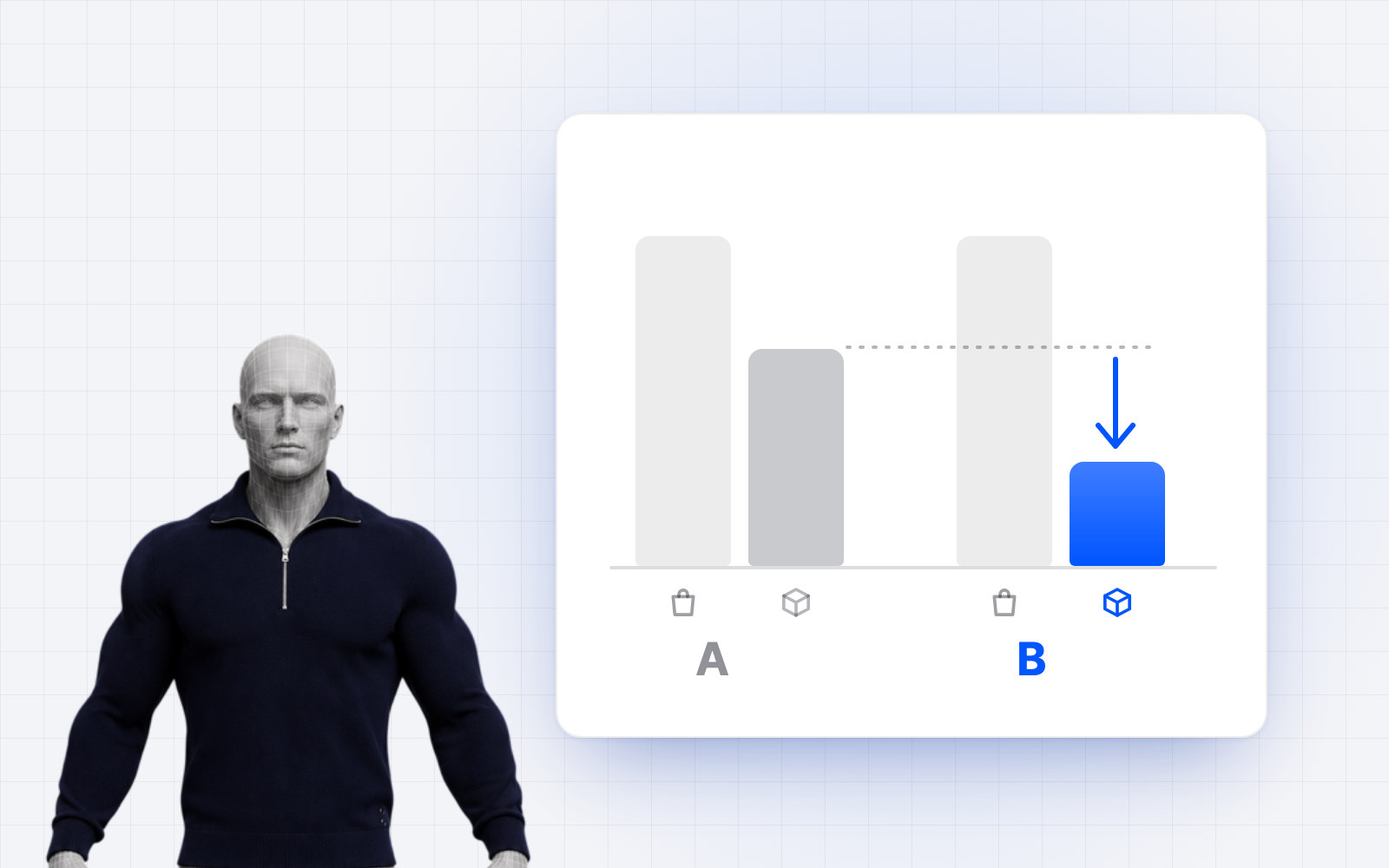
Comparing shoppers who use the tool with those who do not is tempting, but biased: those who take time to try on are often more careful, and would have returned less anyway. The most reliable comparison is an A/B test: some visitors see the tool, others do not, chosen at random.
Without an A/B test, compare the same period year on year, on the same product categories, noting everything that changed in between (sales, new collections, returns policy).
3. Wait for the returns to come in
In the European Union, shoppers generally have fourteen days to withdraw, then fourteen days to send the product back (Directive 2011/83/EU), and many stores allow longer. An order placed on Monday can come back a month later: measure on orders whose return window has closed.
4. Get enough volume
On a few dozen orders, two or three returns more or less move the rate by several points. Wait for several hundred orders per group before concluding, and look at categories separately: trousers and a loose T-shirt do not raise the same size problem.
5. Watch conversion too
A tool that cuts returns but drives buyers away is not a win. Track conversion rate and average basket alongside, with and without the tool.
What OptiDress shows
From installation, the OptiDress dashboard shows try-ons, the most tried-on garments size by size, revenue, orders, average basket and conversion rate with and without OptiDress, as well as the cost of returns.
Frequently asked questions.
Which metric shows a size tool's impact?
The size-related return rate: items returned for a size or fit reason, divided by items sold. The overall return rate mixes too many causes.
How long does it take to measure the impact on returns?
You need to wait until the return window of the orders has closed, often a month or more, and gather several hundred orders per compared group.
Why not simply compare tool users with other shoppers?
Because shoppers who use the tool are often more careful and would return less anyway. An A/B test, with randomly assigned groups, avoids this bias.