What data does accurate size recommendation really need?
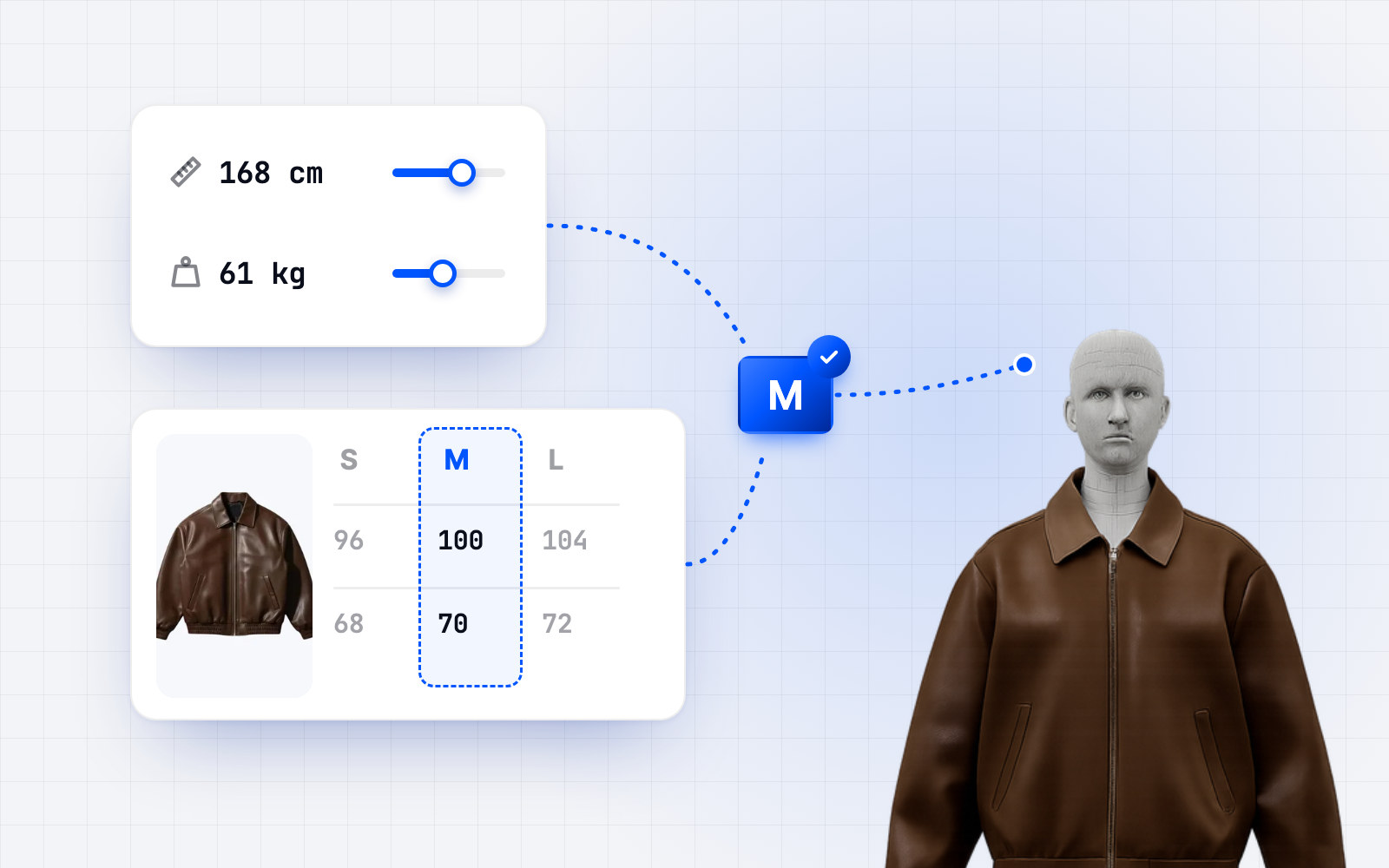
A size recommendation compares two things: the shopper's body and the garment. If either is vague, so is the advice. The question is not "how much data", but "which data, on each side".
We build OptiSize, the size recommendation of OptiDress. Here is what really matters, and what you can do without.
On the shopper side: little data, but the right data
- Height and weight set the scale, and shoppers know them by heart.
- Body shape (where the build sits) separates two people of the same height and weight.
- Chest, waist and hip measurements, optional, refine the result for those who know them.
- Fit preference (close-fitting or loose) changes the advised size without changing the body.
A photo adds no reliable measurement on these points, and it asks more of the shopper. Declared measurements are enough when the garment is well described.
On the garment side: where it all happens
The same "M" does not measure the same from one brand to another, or from one style to another within a brand. Accurate advice needs the garment's measurements for each size (for example chest, waist, hips, length) and its fabric: a stretch fabric does not wear like a rigid one.
A generic size chart for the whole store does not replace these measurements: that is often where errors start.
What about purchase history?
Some solutions rely on shoppers' past purchases and returns. That helps when the history exists, but a new shopper or a new style has none. Body and garment measurements work from the first visit.
How OptiSize works
OptiSize matches the measurements the shopper declares with the measurements of each size provided by the brand, product by product. The shopper sees the recommended size and an explanation for each of the others (slightly small, slightly large, too small, too large). No photo is requested.
Frequently asked questions.
What data is needed to recommend a size?
Shopper measurements (at least height, weight and body shape) and the garment's measurements for each size, with its fabric. Both sides matter equally.
Does a photo improve size recommendation?
Not necessarily: it asks more of the shopper without giving a reliable measurement of the garment. Garment measurements weigh more.
Is a size chart enough?
A generic chart shared by the whole store does not reflect differences between styles. Accurate advice relies on the measurements of each product.